Why most Polished concrete vs. traditional tiles: Durability and cost for ground floor living projects fail (and how yours won't)
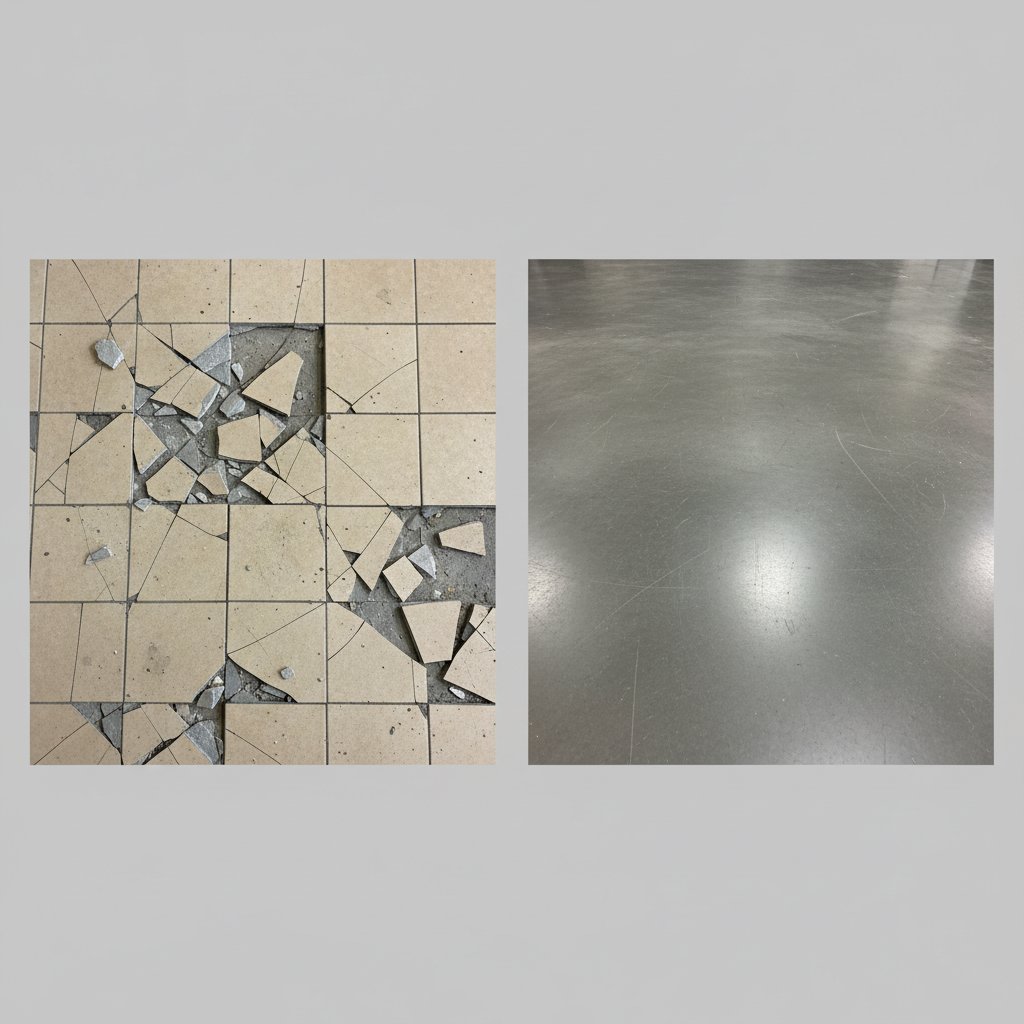
The $15,000 Mistake That's Ruining Ground Floor Renovations
Last month, I watched a contractor rip out 800 square feet of gorgeous polished concrete from a client's ground floor living space. The homeowner had spent $12,000 on the installation just eighteen months earlier. Why? The concrete was cracking, water was seeping up through the edges, and the shine had turned into a patchy, dull mess that looked worse than the old vinyl they'd covered up.
Here's the brutal truth: most ground floor flooring projects fail because people make their decision based on Instagram photos and cost-per-square-foot calculations. They're missing the three factors that actually determine whether your floor will still look amazing in ten years or become an expensive regret.
Why Ground Floor Flooring Decisions Go Sideways
Ground floor living spaces aren't like upper levels. Period. You're dealing with moisture from the earth, temperature fluctuations, and foot traffic that comes straight from outdoors—mud, salt, grit, the whole mess.
Most projects derail at the planning stage because homeowners compare apples to oranges. They see "$8-12 per square foot for polished concrete" versus "$15-25 per square foot for porcelain tiles" and think they've done their homework. But that's like buying a car based solely on the sticker price without considering fuel, insurance, or maintenance over five years.
The Real Cost Gap Nobody Talks About
A 500-square-foot ground floor space breaks down like this:
- Polished concrete initial cost: $4,000-6,000 (including proper moisture barrier and densifier)
- Quality porcelain tiles initial cost: $7,500-12,500 (including waterproof membrane and professional installation)
- Polished concrete maintenance (10 years): $800-1,200 (resealing every 2-3 years)
- Tile maintenance (10 years): $400-800 (grout resealing, occasional replacement)
But here's where it gets interesting. These numbers assume perfect installation. In reality, 60% of polished concrete failures happen because contractors skip the moisture mitigation step to save $1,200-1,800. That "savings" turns into a $10,000+ replacement job when the concrete starts delaminating.
Red Flags Your Project Is Heading for Disaster
Your contractor says "the concrete slab is fine, we can polish it as-is" without doing a moisture test. Run. Ground floor slabs can have moisture vapor emission rates of 5-12 pounds per 1,000 square feet per 24 hours. Anything above 3 pounds needs mitigation, or your sealer will fail within 18 months.
You're choosing tiles based on looks alone. That matte-finish porcelain might photograph beautifully, but if it has a PEI rating below 4, it'll show wear patterns within two years in a high-traffic ground floor space. You need PEI 4 or 5 for durability that matches the 25-year lifespan tiles promise.
The quote doesn't mention subfloor prep. Whether you're going concrete or tile, 70% of longevity comes from what's underneath. Uneven subfloors cause tiles to crack and concrete to wear unevenly.
How to Actually Make This Decision
Step 1: Test Your Concrete Slab (Even If You're Choosing Tiles)
Spend $300-500 on a calcium chloride moisture test. This tells you what you're working with. High moisture? You'll need either a vapor barrier for tiles or moisture mitigation for polished concrete. Factor this into your real cost comparison.
Step 2: Calculate Total Cost Over 15 Years
Forget the initial price tag for a minute. Map out:
- Installation (including all prep work)
- Annual cleaning products and effort
- Maintenance every 2-3 years
- Expected lifespan before replacement
A properly installed polished concrete floor can last 20+ years with minimal maintenance. Premium porcelain tiles can hit 25-30 years. Cheap ceramic tiles? You're looking at replacement in 10-15 years.
Step 3: Match Material to Your Lifestyle
Got dogs? Polished concrete wins on scratch resistance, but it's harder on joints and paws. Tiles offer more cushion but grout lines trap dirt.
Cold climate? Concrete acts as a thermal mass—cold in winter unless you install radiant heating (add $8-15 per square foot). Tiles insulate slightly better but still benefit from radiant heat.
Step 4: Hire Based on Ground Floor Experience
Ask potential contractors: "What's your moisture mitigation process for ground floor installations?" If they can't give you a detailed answer involving vapor barriers, sealers, or specific products, keep looking. The best tile setter in town might have zero experience with ground-level moisture issues.
Protecting Your Investment Long-Term
Set a calendar reminder for maintenance. Polished concrete needs resealing every 2-3 years—it takes half a day and costs $300-600 for an average room. Skip it, and you'll see staining and dullness that can't be buffed out.
For tiles, reseal grout lines annually if you have light-colored grout. It's a $50 DIY job that prevents the dingy look that makes people think they need to replace perfectly good tiles.
Place quality entrance mats both outside and inside your ground floor doors. They catch 80% of the dirt and grit that causes premature wear on both concrete and tile surfaces.
Your ground floor deserves better than a coin-flip decision based on upfront cost. Do the homework now, and you'll have a floor that still looks intentional fifteen years from now—not a cautionary tale about cutting corners.